
How to Identify and Control Cyanobacteria and Black Beard Algae in a Planted Aquarium
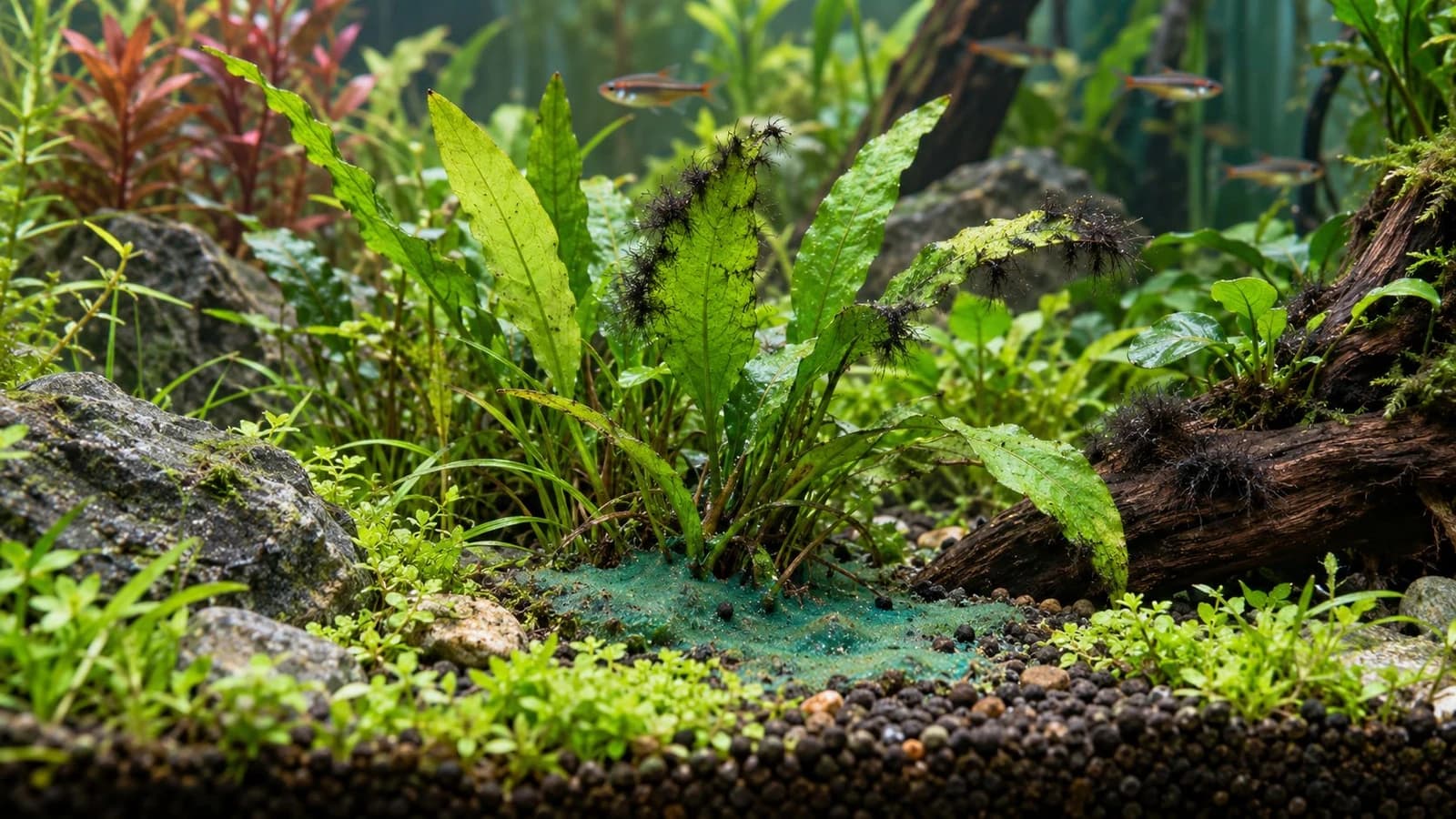
How to Identify and Control Cyanobacteria and Black Beard Algae in a Planted Aquarium
Algae and algae-like growths can be frustrating in a planted aquarium. They can cover leaves, spread across the substrate and hardscape, and make an aquascape look untidy. The first step towards controlling them is identifying what you are dealing with. Cyanobacteria and black beard algae may both appear as dark growths, but they look different and often call for different management approaches.
In this Aqua Club Stories episode, we look at how to recognise cyanobacteria and black beard algae, why they can appear in planted aquariums, and how lighting, nutrients, water circulation and regular maintenance fit into an algae-control plan. The key idea is to manage the conditions that support unwanted growth while keeping the aquarium stable for fish, shrimp and plants.
Why Correct Identification Matters
Aquarium owners often use the word “algae” for any unwanted growth in the tank. However, cyanobacteria is a photosynthetic bacterium, while black beard algae is commonly grouped with red algae. They can look and behave differently, so a treatment that works for one problem may not address the other.
Before changing lighting, fertiliser or filtration, inspect the growth closely. Notice its colour, texture, how firmly it attaches to surfaces and where it is spreading. Also consider whether it is affecting one area or appearing throughout the aquarium. These clues help guide the next steps.
How to Recognise Cyanobacteria
Cyanobacteria often forms a soft, slimy-looking film or mat on the substrate, plant leaves, rocks and other surfaces. It may appear blue-green, dark green, reddish or brown. Unlike many attached algae, a mat of cyanobacteria may lift away from a surface in sheets or peel back when disturbed.
Look for where it first appears. Growth concentrated in areas where debris collects or water movement is limited can be a useful clue to investigate circulation and maintenance. Its presence does not point to one universal cause, so review the whole aquarium rather than assuming that a single water parameter or piece of equipment is responsible.
How to Recognise Black Beard Algae
Black beard algae, often shortened to BBA, usually appears as dark, short, brush-like tufts. It can attach firmly to plant leaves, driftwood, rocks, filter pipes and other hard surfaces. The growth may start as small patches and become harder to remove if it is left to spread.
Check which surfaces are affected and whether the tufts are appearing on older or slow-growing leaves, hardscape or areas around the filter outlet. The location can help you review flow, plant health and the balance between light and available carbon in a planted tank.
What Can Contribute to Algae Problems?
Algae problems rarely have one simple explanation. Lighting, nutrient availability, plant growth, water circulation, feeding and maintenance can interact. A useful response is to review these conditions together and make measured changes rather than trying several treatments at once.
Lighting that exceeds what the plants can use
Long or intense lighting can encourage unwanted growth, particularly when plant growth is slow or the rest of the aquarium is out of balance. Review the daily lighting schedule and whether the aquarium receives direct sunlight. If you adjust the photoperiod, use a consistent timer so the schedule stays predictable.
Nutrient imbalance and excess waste
Fish food, fish waste, decaying leaves and other organic matter all contribute nutrients to an aquarium. Overfeeding, accumulated debris or declining plant health can make the tank harder to keep balanced. At the same time, stripping fertiliser from a planted aquarium without understanding the plants’ needs can weaken plant growth. Aim for a steady, appropriate routine rather than making abrupt changes.
Uneven water circulation
Water movement helps distribute nutrients and oxygen and carries debris towards the filter. Areas with weak circulation may collect detritus, while strong local flow can also be worth reviewing if BBA appears repeatedly around an outlet. The goal is useful, even circulation throughout the aquascape without creating a harsh current for the livestock.
Inconsistent carbon dioxide in injected tanks
For aquariums that use injected CO2, consistency matters. If CO2 delivery varies significantly from day to day, plants may struggle to grow steadily. Review the timing and distribution of CO2 alongside the lighting schedule, and avoid increasing light or fertiliser to compensate for a problem that may have another cause.
A Practical Plan for Managing Cyanobacteria
Remove as much of the visible mat as practical. Siphon or lift it out carefully during maintenance so that it does not simply break apart and spread around the aquarium.
Remove trapped debris. Clean affected areas and siphon detritus from the substrate without unnecessarily disturbing plant roots or disrupting the biological filter.
Review circulation. Check whether water movement reaches the affected areas and whether the filter is operating normally.
Check the aquarium routine. Review feeding, plant condition, water-change consistency, lighting duration and any relevant test results.
Make changes gradually. Adjust one or two likely contributing conditions at a time and observe the aquarium before making further changes.
If you are considering a product-based treatment, confirm that it is suitable for your fish, plants and invertebrates, and follow its label precisely. Some treatments can affect sensitive livestock or beneficial bacteria. Keep filtration running as directed and monitor the aquarium closely.
A Practical Plan for Managing Black Beard Algae
Remove heavily affected material. Trim leaves that are badly covered if the plant can be pruned safely. Scrub removable hardscape outside the aquarium where practical.
Check filter performance and circulation. Inspect the filter intake, outlet and mechanical media for blockages or a drop in flow. Clean equipment according to the filter manufacturer’s instructions.
Review light and plant growth. Confirm that the photoperiod suits the plants in the aquarium and that light intensity is not excessive for the tank’s plant mass and setup.
Stabilise CO2 if it is used. Check that the system runs consistently and distributes CO2 through the planted areas. Avoid sudden increases that could create risks for fish and shrimp.
Keep up with routine maintenance. Remove decaying leaves, clean collected debris and maintain a regular water-change schedule suited to the aquarium.
Removing visible BBA can improve the appearance of the tank, but the growth may return if the conditions that support it remain. Watch for new growth after making adjustments. The appearance of fresh tufts is a reason to review the aquarium again rather than simply repeating a treatment.
Keep the Aquarium Stable While You Make Changes
When an outbreak appears, it is tempting to change lighting, fertiliser, CO2, feeding and filtration all at once. That makes it difficult to tell which change helped and can put additional stress on the aquarium. Make measured adjustments and give the plants and livestock time to respond.
Keep a regular lighting schedule and avoid sudden, large changes.
Feed fish appropriately and remove uneaten food.
Prune decaying or heavily affected plant leaves.
Clean the filter when needed without replacing or washing all biological media at once.
Check that water movement reaches the planted areas and hardscape.
Use water tests when they can help you understand the aquarium’s condition.
Observe fish, shrimp and plants after any change or treatment.
Preventing Recurring Algae Growth
Prevention comes from keeping the aquarium’s routine consistent and supporting healthy plant growth. A clean tank is not necessarily a sterile tank; the aim is to prevent excess waste and unstable conditions while maintaining the nutrients and circulation that plants need.
Use a timer for aquarium lighting, avoid unnecessary direct sunlight, keep up with water changes, remove decaying leaves and maintain the filter. In a CO2-injected aquarium, check the equipment regularly and aim for consistent delivery. When introducing new plants or hardscape, inspect them before adding them to the tank.
Frequently Asked Questions
Is cyanobacteria the same as algae?
No. Cyanobacteria is a photosynthetic bacterium, although it is often called blue-green algae in aquarium conversations. Its slimy mat-like appearance can help distinguish it from many common attached algae.
How can I tell black beard algae from cyanobacteria?
Cyanobacteria commonly forms a soft film or mat that may lift off in sheets. Black beard algae tends to form short, dark, brush-like tufts attached to leaves and hard surfaces.
Will reducing the light solve every algae problem?
No. Adjusting the photoperiod may be useful when lighting is excessive, but lighting is only one part of the picture. Plant health, nutrients, waste, circulation and CO2 consistency in injected tanks can also matter.
Why does black beard algae come back after cleaning?
Cleaning removes visible growth, but it does not necessarily change the conditions that allowed it to develop. Review the lighting schedule, plant health, filter flow, maintenance routine and CO2 stability if the algae returns.
Should I use a chemical treatment immediately?
Start by identifying the growth and reviewing the aquarium’s conditions. If you choose a treatment, make sure it is suitable for your livestock and plants and follow the product directions carefully. Monitor the aquarium during treatment.
Understanding the Problem Is the First Step
Cyanobacteria and black beard algae can both disrupt the appearance of a planted aquarium, but identification gives you a more useful starting point. Look closely at the growth, review the aquarium’s lighting, nutrients, circulation and maintenance, then make stable, targeted changes. With consistent observation and care, you can manage the visible outbreak and reduce the chance of it returning.
Watch the Aqua Club Stories episode, Dealing with ALGAE | Problem and Solution | Episode-13, for the discussion on identifying cyanobacteria and black beard algae and managing algae in a planted aquarium.