Best Fish for Every Aquascape Style
Which Fish Belong in Which Aquascape? A Guide to Matching Livestock and Layouts
Choosing fish for an aquascape is about more than color. The aquarium’s layout, open swimming space, planting, water conditions and the behavior of its inhabitants all affect whether a fish can thrive there. In Episode 16, we look at six popular aquascape styles and discuss the fish and invertebrates that can suit each one.
Use these suggestions as a starting point, then research the needs of each species before stocking. Aquarium size, water parameters, group size and individual temperament all matter—and a beautiful match on paper is not a guarantee of compatibility.
1. Dutch aquascape: schooling fish among dense plants
Dutch aquascapes are known for dense, carefully arranged plant groupings and contrasting colors. They often resemble an underwater garden, with little or no wood and rock in the layout. Since the plants are the main feature, fish that move calmly through the open lanes between plant groups can complement the design without overwhelming it.
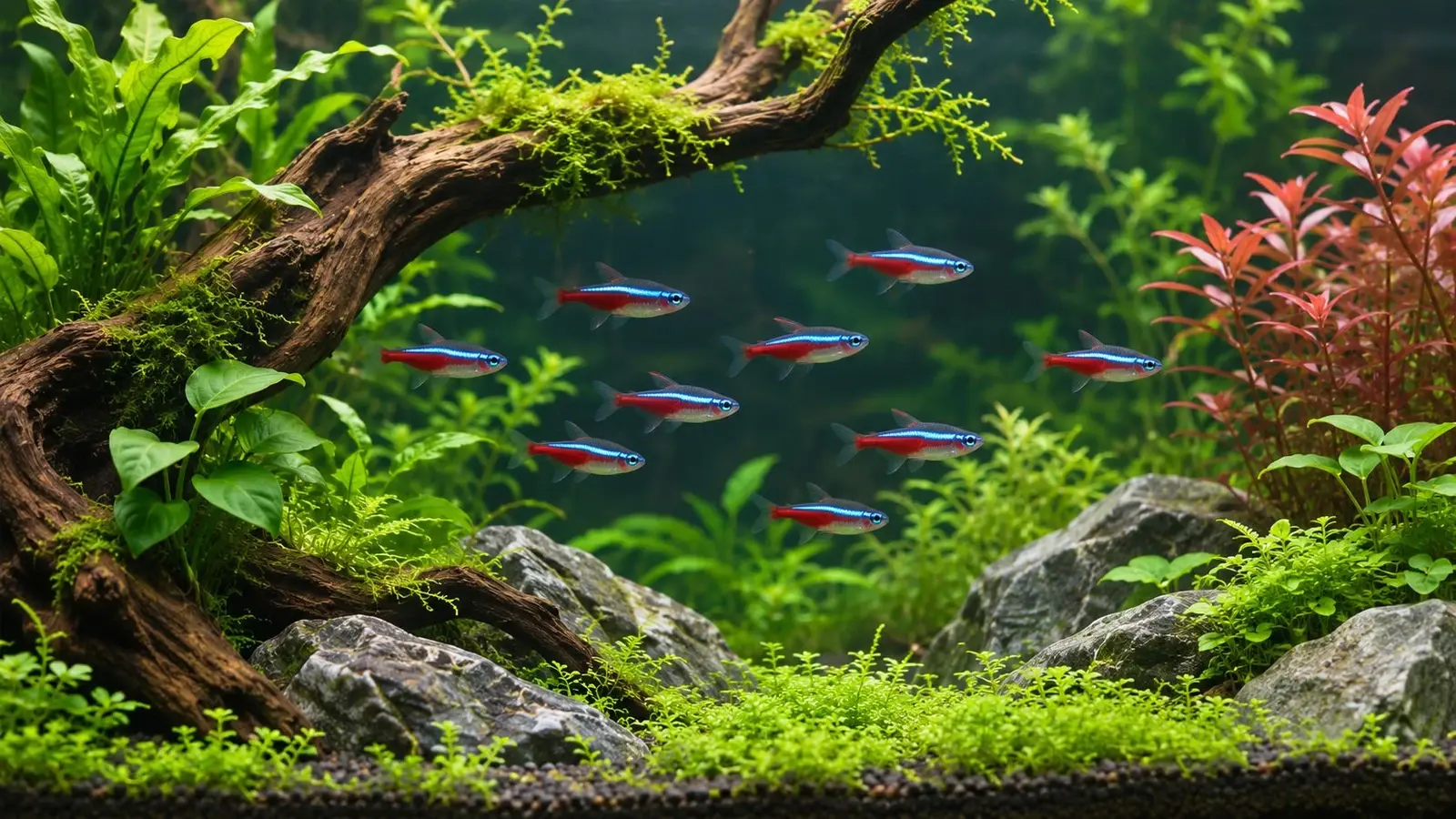
Small schooling tetras are one option. The video specifically mentions cardinal tetras, whose bright coloration can stand out against green and red stems. Shop Cardinal Tetra at Aqua Club.
Be cautious with fish that may eat plants or disrupt the aquascape. Some larger, active species can damage delicate growth, while bottom-dwelling fish may disturb a carefully arranged substrate. Check the adult size and feeding habits of any species before adding it to a densely planted tank.
2. Iwagumi: keep the composition open
Iwagumi layouts use a deliberate arrangement of stones, usually with low carpeting plants and broad areas of open water. The clean, spacious design makes small schooling fish a natural visual fit. Cardinal tetras and other appropriately sized tetras can add movement without taking attention away from the stone composition.
Fish that dig or sift through the substrate may uproot a new carpet or shift carefully placed material. The video cautions against bottom-dwellers such as kuhli loaches for this reason. Amano shrimp and Otocinclus are also discussed as possible algae grazers, but they need suitable food, stable water and a tank that meets their species-specific care requirements.
3. Nature aquarium: choose fish for a planted hardscape
Nature aquariums often combine wood, stone, plants and open paths to suggest landscapes such as riverbeds, valleys or mountain streams. The mix of hardscape and vegetation can suit peaceful fish that use different areas of the tank.
The video mentions angelfish and tetras as possibilities. Neon tetras can provide a bright contrast against darker wood, provided the aquarium is appropriately sized and the fish are compatible with their tankmates. Before choosing angelfish, consider their adult size and the needs of every other fish in the community.
Large or disruptive cichlids may dig, move décor or displace sand and wood. The episode names Oscars and Jack Dempseys as examples to avoid in a carefully arranged nature aquarium.
4. Island aquascape: use the open water thoughtfully
An island aquascape concentrates its plants and hardscape near the center, leaving an open perimeter that can create a sense of space. Fish that swim through open water may complement this layout, as long as the aquarium’s dimensions and water conditions meet their needs.
The video discusses gouramis and livebearers as possibilities. It also points out that some fish are easily startled or may jump, so a secure lid and a calm environment are important considerations. Apistogramma can be territorial, particularly around breeding sites, and may chase other fish. Plan tankmates and shelter carefully rather than assuming every community combination will work.
5. Hardscape-only aquascape: plan for the fish’s needs
A hardscape-only aquarium features elements such as wood, stone and sand without planted vegetation. The video mentions discus and angelfish as possible choices, along with a pleco as a fish that can complement the natural look.
Every species still needs appropriate space, filtration, water conditions and nutrition. Pleco species vary considerably in adult size and care requirements, so identify the exact species before purchasing. The episode also cautions against keeping Otocinclus in a setup without suitable grazing surfaces or supplemental food; these fish should not be expected to survive on algae alone.
6. Biotope aquascape: recreate one habitat
A biotope aquarium aims to represent a particular natural environment. The example in the video is a blackwater habitat inspired by Amazonian rivers, with botanicals and tannin-stained water.
For this type of setup, the episode suggests fish associated with that environment, including wild-type angelfish, cardinal tetras, blue rams and Apistogramma. A biotope works best when its livestock and décor reflect the same habitat. Avoid combining species simply because they look attractive together; fish from different regions may have different water and environmental requirements.
Match the aquarium, not just the color
Fish can add movement and personality to an aquascape, but their welfare comes first. Before stocking, research each species’ adult size, social behavior, preferred water conditions, diet and compatibility. Consider how it will interact with the plants, substrate, hardscape and other inhabitants as the aquarium matures.
For more examples of how to match livestock to an aquascape, watch the full episode:
Comments
No comments yet. Be the first to comment!