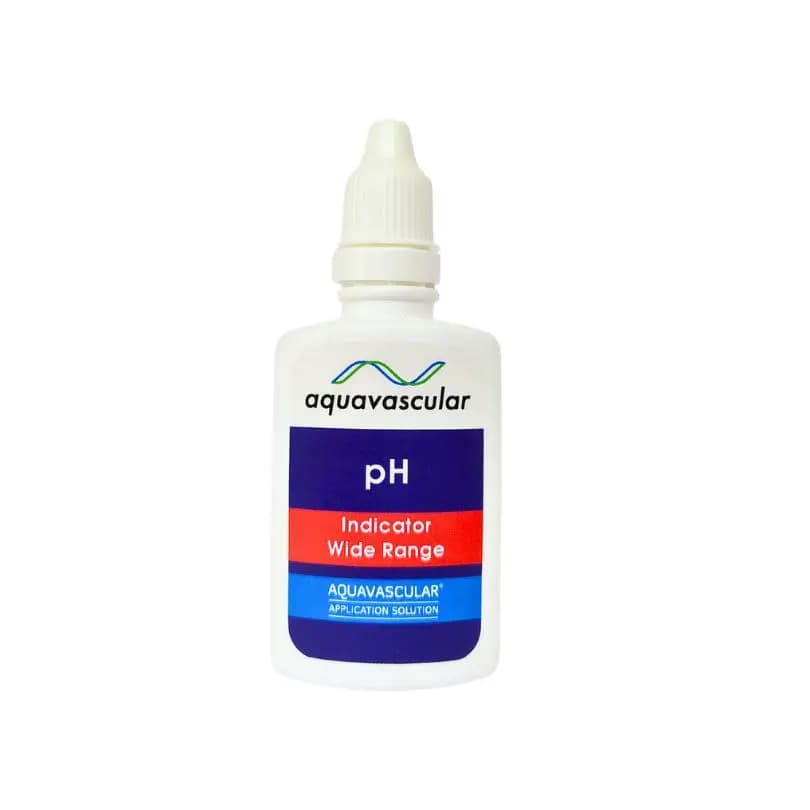
Aquavascular Freshwater PAN Water-Test Kit – Complete Water Parameter Testing for Freshwater Aquariums
The Aquavascular Freshwater PAN Water-Test Kit is a multi-parameter testing solution combining phosphate, ammonia, nitrite and nitrate tests — four vital parameters that influence plant nutrient balance and fish health. This kit enables aquarists to routinely monitor water chemistry and make well-informed maintenance or dosing decisions.
The kit includes all necessary reagents, labelled test vials, a syringe (without needle), colour charts and an instruction manual for straightforward testing and reliable results. It’s especially useful for planted aquariums, shrimp and fish tanks, where nutrient levels and waste byproducts must be closely monitored.
What’s Tested & Why It Matters
- Phosphate (PO₄) — Essential nutrient for plants; too high may trigger algae outbreaks; too low may stunt plant growth.
- Ammonia (NH₄⁺) — Toxic to fish/invertebrates; indicates new tank cycling or inadequate biological filtration.
- Nitrite (NO₂⁻) — Also toxic and a sign of incomplete nitrogen cycle.
- Nitrate (NO₃⁻) — Lower toxicity but high levels stress livestock and may fuel algae; indicates need for water change or denitrators.
How to Use the Test Kit
- For each parameter, take 5 ml of aquarium water in the test vial.
- Follow the reagent addition instructions for each test:
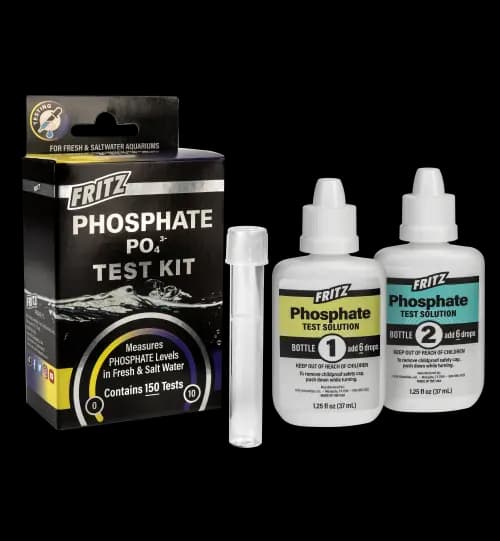
- Phosphate Test: Add 8 drops of Solution PO4-1, mix 10 s; then add 8 drops of PO4-2, mix 10 s; compare with colour chart.
- Ammonia Test: Add 10 drops of Solution NH4-1, mix 10 s; then 10 drops of NH4-2, mix 10 s; wait 15 minutes; compare with colour chart.
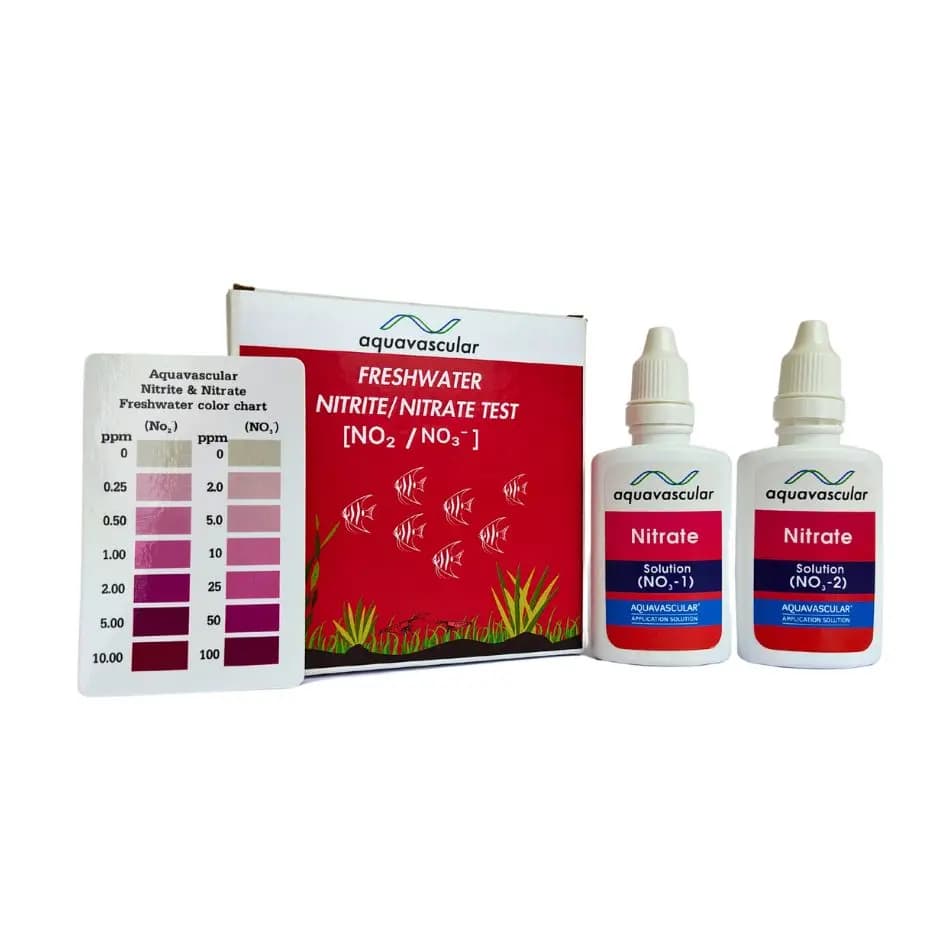
- Nitrite / Nitrate Test: Add 5 drops of NO3–1, mix. If pink appears → record nitrite reading. If not, add another 5 drops of NO3–1, then 10 drops of NO3–2 (shake NO3–2 vigorously for 1 min before use), mix and wait 5 minutes; compare with chart for nitrate reading.
- Use the provided colour chart to determine parameter levels.
- Wear protective gloves and avoid skin or eye contact with reagents. Keep out of reach of children.
Suggested Maintenance & Water-Quality Practices
- Test water regularly — after water changes, filter cleaning or fertiliser dosing.
- Perform 30–50% water changes if ammonia, nitrite or nitrate levels are high.
- Feed fish only what is consumed quickly; remove uneaten food to reduce waste build-up.
- Maintain efficient biological filtration; consider using beneficial bacterial boosters if needed.
- For planted tanks: adjust fertilization based on phosphate & nitrate levels to avoid algae and nutrient imbalance.
- Store reagents in a cool, dry place and handle reagents carefully to maintain accuracy.